Winter may be beautiful, but it can be brutal for our wild animal friends. As temperatures drop and natural food sources become scarce, birds, squirrels, and other wildlife face a tough battle for survival. The good news? We can help.
Supporting wildlife in winter is not only kind—it connects us more deeply to the natural world. Here are some simple ways to do it, with a few familiar faces you might recognize in your own backyard.
1. Feed the Birds—Responsibly
Birds burn more energy in cold weather and need consistent food sources. A well-stocked feeder can be a lifesaver. Offer high-energy foods like:
Black-capped chickadees and nuthatches love black oil sunflower seeds.
Northern cardinals enjoy safflower and sunflower seeds.
Woodpeckers and carolina wrens flock to suet cakes for the extra fat content.
Blue jays are big fans of unsalted peanuts.
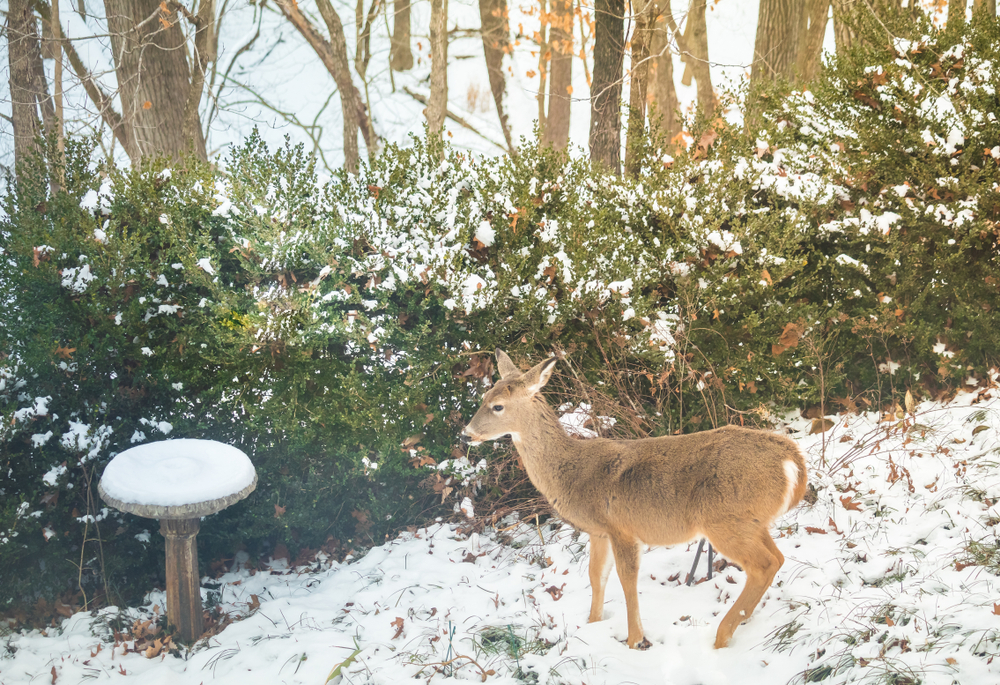
Yes, deer eat from bird feeders and that’s ok!
Squirrels, too, and that’s ok! BTW, squirrels love walnuts and hazelnuts in the shell–necessary to keep their teeth trimmed down. A steady diets of peanuts can lead to dietary deficiencies so if you feed squirrels, feed them nuts in hard shell and only choices that support their health.
Clean feeders regularly to prevent disease, and keep them filled—these little creatures learn quickly where to go for help.
2. Provide Unfrozen Water
Finding liquid water is a major challenge for wildlife in winter. Use a heated birdbath or add a birdbath heater to your existing one. You may see:
Robins, who often stay through winter, visiting for water even if they don’t use feeders.
Squirrels stopping by for a drink during foraging. So do raccoons, opossums, skunks and rabbits
Even deer, depending on your location, may rely on accessible fresh water.
3. Leave the Leaves and Brush Piles
If you can, avoid overly tidying your yard. Fallen leaves and brush piles offer shelter and insulation for small mammals, insects, and amphibians.
Eastern cottontail rabbits shelter under brush piles.
Box turtles and garter snakes may burrow into leaf litter.
Mourning cloak butterflies overwinter as adults under tree bark or in log piles—don’t disturb them if you can help it!
4. Build Shelter
Even a simple pile of sticks or a brush shelter in a quiet corner of your yard can offer refuge.
Red or gray squirrels may take shelter in leaf nests or hollow logs.
Opossums and raccoons seek temporary dens in woodpiles, sheds, or under porches.
Roosting boxes provide warmth for wrens, bluebirds, and even bats.
5. Don’t Use Chemicals
Avoid pesticides and salt-based de-icers, which can harm wildlife and pollute groundwater.
Foxes, hawks, and owls can suffer from eating rodents exposed to poison.
Amphibians like frogs and salamanders are especially sensitive to toxins in the soil and water.
Use pet-safe alternatives and natural pest control methods where possible.
6. Plant for the Future
Native trees, shrubs, and perennials provide year-round shelter and food.
Cedar waxwings feast on winter berries like holly and juniper.
Sparrows and finches feed on the seed heads of native flowers like coneflowers and black-eyed Susans.
Chipmunks and mice take cover in thick ground cover and brushy areas.
Bigger picture, you can also donate to reputable wildlife charities. World Wildlife Fund (WWF), Wildlife Conservation Society (WCS), and Defenders of Wildlife are just a few.
Winter can be hard, but your yard can become a haven. Every feeder filled, every brush pile left undisturbed, every bowl of unfrozen water—it all adds up. We may not be able to warm the entire world, but we can make one corner of it a little kinder for the creatures who share it with us.
I’m also of the “and that’s okay” camp when it comes to my birdfeeders. If the squirrels are taking turns at the feeders, I just make sure there’s enough for everyone. Thanks for this. I learned a couple of things!
Here you’ll find my blog, some of my essays, published writing, and my solo performances. There’s also a link to my Etsy shop for healing and grief tools offered through A Healing Spirit.
I love comments, so if something resonates with you in any way, don’t hesitate to leave a comment on my blog. Thank you for stopping by–oh, and why not subscribe so you don’t miss a single post?


This is a great reminder to remember all the wild life that live, or visit our yards in every season.
It’s always a good thing to support them!
I’m also of the “and that’s okay” camp when it comes to my birdfeeders. If the squirrels are taking turns at the feeders, I just make sure there’s enough for everyone. Thanks for this. I learned a couple of things!
Oh…I love this!