It’s not an attack on men. Truth is, toxic masculinity isn’t about masculinity at all. It’s about the unhealthy expectations that society has placed on boys and men. And the damage those expectations can cause to everyone.
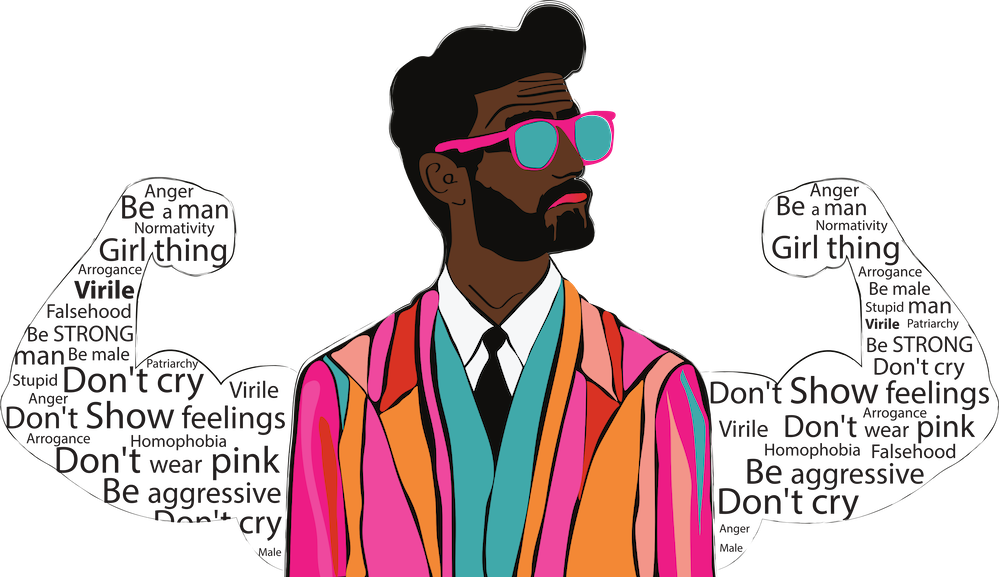
We may live in the 21st century but many boys are still being taught implicitly (or even explicitly) that vulnerability is weakness, emotions should be suppressed, and that strength means dominance.
They’re taught to not show sadness, and under no circumstances should they ask for help.
These lessons are often modeled by the older men around them and passed down through generations. A father taught never to cry may teach the same lesson to his son. We see these same messages in the media and also the workforce.
Culture affects how we view masculinity
The idea that men must always be tough, self-reliant, and emotionally invulnerable is reinforced by cultural influences. I saw this in my own Sicilian-American culture. But I also have to say that there’s nothing more attractive to me than a masculine Sicilian-American who shows his vulnerability. It’s devastatingly attractive.
But toxic role messages prevail. We see the results in families, relationships and in business. Have you noticed how some men struggle to form deep emotional connections? How hard it is for some men express fear, grief, or tenderness?
Some turn to anger because that’s one of the few emotions our society allows them to display openly. Others suffer silently with loneliness, depression, anxiety, or feelings of inadequacy.
Of course, we know that true strength is found in resilience, but that’s not what boys are taught.
What do we do about it?
Knowing how these toxic traits have developed doesn’t excuse the behavior but it does allow us to respond more effectively.
We can start by recognizing that beneath many defensive or aggressive behaviors may actually be fear, insecurity, or emotional pain.
No, don’t tolerate abuse or disrespect. Boundaries are essential. Yes, compassion and boundaries can coexist.
It’s also important to encourage emotional honesty. But sometimes we women are uncomfortable when men show their vulnerable side. That’s got to stop. When men are are given permission to express a fuller range of emotions, and even acceptance, they often discover strengths they didn’t know they had.
Unlike what some think, courage is not at all the absence of vulnerability. Sometimes courage is vulnerability itself. But it’s a hard sell in today’s society. Yes, even today.
It’s vital for men to model healthy masculinity for their sons and other young men in their circle.. That includes responsibility, integrity, protection of the vulnerable, emotional intelligence, kindness, and self-awareness. It’s important to teach boys that these are real strengths.
Change is necessary
I know you know men who would rather die than show vulnerability. Me, too. But we have to change that.
That’s why it’s so important to challenge these harmful stereotypes when we see them. Boys need to hear that they can be both strong and gentle. Men need to know that asking for help is a sign of wisdom, not failure. Human beings thrive when they are free to express all sides of their personalities.
We’re not talking about less masculinity, but healthier masculinity. This true definition of masculinity allows men to live authentically, build meaningful relationships, and contribute their gifts to the world without being trapped by outdated expectations.
Imagine how the world around us would benefit if we created space for that kind of growth.
A lovely and truthful post. Irony in life can mean how things turn out. My father died early on. John was six, I was three, and Bill was three months old. Raised by our mother, my brothers grew to be MEN, but they were always kind, open to ideas and full of eagerness to learn. That is not to say that had my father lived, he would have raised them differently, as I am sure he would have contributed to their openness, their kindness. But we will never know. What we do know if that my brothers were amazing and loving men. Bill has died; John is still there to support my writing and to always love me. I have been blessed with both of them.
Such a good point. Afghanistan is the most blatant example of toxic masculinity gone haywire. Women are being erased from that society. We have those problems too, but it’s interesting to see what happens when the masculine is so far valued over the feminine that an entire culture is shaped around it.
Toxic masculinity is the bane of modern society, in my opinion. I have seen some good boys turn into absolutely gross men thanks to its prevalence on social media.
I hate, hate, HATE the whole toxic masculinity movement. The rise of the Tate brothers really gave it a foothold, and I’ve seen some great young men turn into controlling, emotionally abusive, toxic bros.
Yay, excellnt it’s clear you separate toxic expectations from masculinity itself. The point about vulnerability being a form of courage really stayed with me.
I’ve heard that term, toxic masculinity, being bandied around a lot on social media and its implications create addition layers of stress for boys and men in society. Vulnerability is normal and fighting it is a waste of time. We can all benefit from a dose of compassionate care.
Here you’ll find my blog, some of my essays, published writing, and my solo performances. There’s also a link to my Etsy shop for healing and grief tools offered through A Healing Spirit.
I love comments, so if something resonates with you in any way, don’t hesitate to leave a comment on my blog. Thank you for stopping by–oh, and why not subscribe so you don’t miss a single post?

 What is “toxic masculinity?”
A lovely and truthful post. Irony in life can mean how things turn out. My father died early on. John was six, I was three, and Bill was three months old. Raised by our mother, my brothers grew to be MEN, but they were always kind, open to ideas and full of eagerness to learn. That is not to say that had my father lived, he would have raised them differently, as I am sure he would have contributed to their openness, their kindness. But we will never know. What we do know if that my brothers were amazing and loving men. Bill has died; John is still there to support my writing and to always love me. I have been blessed with both of them.
Such a good point. Afghanistan is the most blatant example of toxic masculinity gone haywire. Women are being erased from that society. We have those problems too, but it’s interesting to see what happens when the masculine is so far valued over the feminine that an entire culture is shaped around it.
I cannot stand men like this. It’s a shame some were raised to behave like morons. I must prefer kind men who aren’t afraid to share their feelings.
Toxic masculinity is the bane of modern society, in my opinion. I have seen some good boys turn into absolutely gross men thanks to its prevalence on social media.
I hate, hate, HATE the whole toxic masculinity movement. The rise of the Tate brothers really gave it a foothold, and I’ve seen some great young men turn into controlling, emotionally abusive, toxic bros.
That is such a sad thing.
Youve explained this so beautifully. I agree, a strong man who can comfortably express vulnerability, sensitivity and tenderness is attractive.
Conversely with women too, called crazy for expressing strong emotions like anger. Called a bitch for showing string leadership and boundaries.
Imagine what the world would be like if there was balance in every boardroom and governing office.
A very good point about women.
Yay, excellnt it’s clear you separate toxic expectations from masculinity itself. The point about vulnerability being a form of courage really stayed with me.
Brilliant post. I’m a little concerned about how the military might undo some of the good non-toxic stuff I instilled in my son.
That is a realistic concern.
I’ve heard that term, toxic masculinity, being bandied around a lot on social media and its implications create addition layers of stress for boys and men in society. Vulnerability is normal and fighting it is a waste of time. We can all benefit from a dose of compassionate care.